A regular genre column for Mslexia, introducing writers to a fiction genre through the authors shaping it, the craft it demands and the agents currently buying it.
One morning in 2014, novelist Laila Lalami saw a Google notification on her phone: ‘If you leave right now, you will make it to YogaWorks at 7.28.’ She had never told Google she went to yoga, let alone the time or place of her classes. The company had simply tracked her movements until its algorithms had learned that she typically left home at a certain time each week and visited a location that its mapping software had determined was a yoga studio. She turned to her husband and said, ‘Pretty soon, the only privacy we will have will be in our dreams.’ But this also made her pause. What if dreams are taken from us, too?
The novel that grew from that moment, The Dream Hotel, was longlisted for this year’s Women’s Prize, and it belongs to a strand of fiction appearing more and more as we grapple with a world increasingly run by systems we can’t see or understand: books in which bureaucracy, institutions and administrative systems are the driving force of the plot – and oftentimes the antagonist itself.
The genre’s presiding spirit needs little introduction. If body horror (the theme of last issue’s column) belongs to Gregor Samsa, this territory belongs to Kafka’s other great creation: Josef K., arrested one morning for a crime that is never named and tried by a court he can never really pin down. One hundred years after Kafka, writers are returning to many of those same anxieties, albeit with a contemporary flavour; today’s bureaucracies are marked by dashboards, HR departments and, that ever-reccuring beast, AI.
In 2024, to mark the centenary of Kafka’s death, Little, Brown published A Cage Went in Search of a Bird, a collection of ten new stories by writers ‘fascinated and inspired by the way [Kafka] presents characters wrestling with the oppressive weight of systems and bureaucracy’. The stories include Ali Smith exploring surveillance, Elif Batuman writing about housing and Leone Ross tackling the medical establishment.
Anna Kelly, Publishing Director at Little, Brown, describes the renewed appetite to explore these anxieties as ‘a general feeling of powerlessness and precarity in society, coupled with a dramatic loss of trust in institutions after so many cover-ups, failures and instances of corruption.’ She adds, ‘Institutions now seem shadowy and full of layers and deception, which invites storytelling…’ Oh boy, does it.
Computer says no
In The Dream Hotel, archivist Sara Hussein is pulled aside at an airport by agents of the Risk Assessment Administration (RAA) because an algorithm fed by her dreams has decided she is at imminent risk of harming her husband. She is detained for observation, and every infraction of the facility’s petty rules extends her stay, perpetuating a frustrating profit-driven system that benefits from its own failures.
‘When I tell people that I wrote a novel in which algorithmic prediction of crimes plays a central part, they immediately respond, oh, so you’re writing a dystopia,’ Lalami says on her website. ‘But pre-crime isn’t fictional, and it’s not even in our future, but part of our present and our past. We just don’t think of it because it’s called something else,’ she adds, pointing to stop-and-frisk and the No-Fly list as pre-crime by other names.
In We Had to Remove This Post, Hanna Bervoets also explores how systems can govern human life – this time in the form of a shadowy platform’s algorithm. The novel sees content moderators for an unnamed megacorporation scored and timed as they enforce ever-shifting terms of service, with the humans ground down by the very system they’re employed to enforce.
Kelechi Okafor’s debut Are You Still Watching (published by Scholastic in September) takes the conceit to YA. A teenage girl discovers her entire life is a reality show broadcast across the galaxy, and that a bored audience means cancellation. Permanently. Here the algorithm serves as the system that judges whether human life has value, with cancellation as the ultimate bureaucratic sanction and engagement metrics a literal matter of life and death.
What may read as a speculative premise is anything but for Okafor, who tells me, ‘So many of us are being sucked into the system of being validated by what algorithms reflect back to us. People are changing their economic status almost overnight by the algorithm selecting their videos to push.’
Out of office
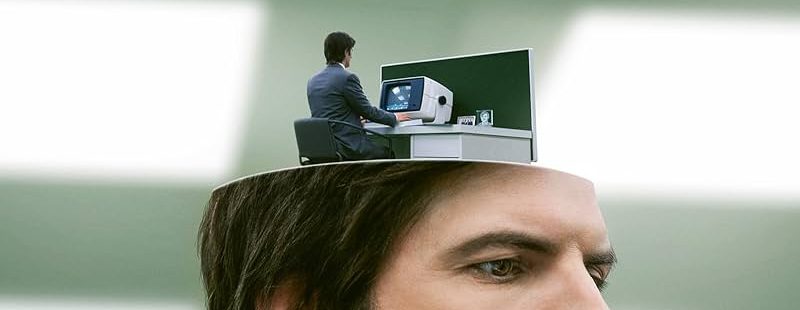
One of the most prominent examples of the workplace as the antagonist is in the TV show Severance, where employees of the cultish Lumon Industries perform inexplicable tasks for a corporation whose rules, purpose and leadership remain entirely opaque. It’s a setting so rich precisely because it exaggerates something we all latently feel about the absurdity and monotony of the systems that underpin office work.
In Ben Pester’s novel The Expansion Project, a mid-level employee loses his daughter at bring-your-daughter-to-work day. After he raises the alarm, he learns that she was never actually there. Around him, the business park he works in expands by itself – unexpected buildings, years-long business days, corridors of the mind. Pester describes it as ‘a kind of horror novel about office work’, with its monster deliberately impossible to grasp. As he tells The London Magazine, he wrote the novel’s setting and antagonist to be ‘intentionally frustrating’, highlighting how systems can be ‘terrifying and deadly, and dehumanising, and hard – impossibly hard – to put a pin into’.
That creeping sense that organisations develop lives of their own surfaces again in Bora Chung’s The Midnight Timetable. Set inside a labyrinthine research facility with endless corridors, looped staircases and disappearing doors, the novel treats institutional procedure as a form of horror. For editorial director Hannah Chukwu, this kind of institutional horror resonates precisely because it reflects everyday experience. ‘People feel increasingly wary of institutions in general, so I can definitely see how they could come to represent something almost human in people’s minds as they try to make sense of systems that confound them,’ she tells me. Chukwu points to an underlying powerlessness that speaks to why faceless corporations carry more dread than individual actors: ‘The real dangers are often broken systems, rather than individuals within them.’
But why has the workplace become so easy to mythologise? Kelly connects it to a generational shift. ‘Dark Academia got massive during the Covid years,’ she says, and wonders ‘if there’s something similar going on with the idea of work now – whereby it’s getting more mysterious and harder to break into, so the workplace as setting is more easily mythologised, feared, romanticised.’
Whose pain is it anyway?
The politics of this trend cannot be ignored, with a number of writers across this genre asking which bodies institutional systems are designed to serve, and which they are designed to manage. Lalami deliberately made her surveilled protagonist a woman. ‘Women are subjected to all kinds of surveillance and policing, and I wanted the novel to delve into those as well,’ she has said, arguing that the patriarchy is ‘a system of surveillance that is so internalised that we often don’t even realise we’re enacting it.’
Where Lalami interrogates surveillance, A M Ellis’s YA dystopian novel I Feel Your Pain takes aim at healthcare. In the novel’s world, pharmaceutical giant Dominion has transformed pain into a currency, building an entire society around deciding whose suffering matters and whose can be exploited. ‘When it comes to healthcare and pharmaceutical power, because of the systemic issues within, it’s nearly impossible to discuss without including conversations of class and race,’ she tells me.
Her editor, Stephanie Hall, also connects the novel to real-world scandals such as the OxyContin crisis and the contaminated blood scandal – moments where ‘profit was put ahead of people’s safety, with some of society’s most vulnerable being exploited’.
Rooted in the real-life demolition of the Otodo Gbame waterfront community by the Lagos state government, ‘Pemi Aguda’s One Leg on Earth turns to urban development as a site for bureaucracy and control. In the novel, as an architectural firm reclaims land for a gleaming new city, pregnant women across Lagos begin to die. It explores capitalism, futurism, decay, inequality and poverty alongside regeneration and motherhood, placing the promises of development alongside the people who must live with its consequences.
And Okafor traces her book directly to the deaths of Sandra Bland and Breonna Taylor, and to the question of whose deaths become content. ‘My observations really look at who is most vulnerable as it pertains to technological advancements,’ she says, ‘and whose bodies are given dignity should anything bad happen.’
Where next?
Another system drawing writers’ attention is housing, which Kelly argues ‘has been a particularly big theme in fiction by younger generations for some time – the situation is just so dire it’s inescapable’. She points to Keiran Goddard’s I See Buildings Fall Like Lightning, Holly Pester’s The Lodgers and Róisín Lanigan’s I Want to Go Home But I’m Already There as key examples.
As these books demonstrate, fiction is catching up with the way many of us now experience power. While forms, filing cabinets and faceless civil servants once defined the bureaucracy novel, its modern descendants take on the systems that govern us now: an algorithm that predicts what you’ll do next, a healthcare provider that puts a number on your suffering. Kafka’s labyrinth has gone digital.
LITERARY AGENTS
Anna Webber at AM Heath
Alexander Cochran at Greyhound Literary
Eleanor Birne at RCW Literary Agency
THE RECIPE
Take… a system every reader has already signed up to (a credit score, an HR portal, a terms-of-service box)
Add… a protagonist who believes the system works – until it turns on them
Stir in… the language of the institution – forms, transcripts, compliance frameworks
Sift out… the scheming villain behind the curtain
Cook… until the absurd and the ordinary are indistinguishable
THREE NOTABLE PUBLICATIONS
The Dream Hotel – Laila Lalami
Archivist Sara Hussein is detained by the Risk Assessment Administration after an algorithm fed by her dreams decides she might commit a crime. She’s held in a facility where every rule infraction extends her stay; a system that profits from never letting her go. Reminiscent of Philip K Dick’s The Minority Report, this was longlisted for the Women’s Prize, and hits terrifyingly close to home: Lalami based her invention on the credit score.
The Expansion Project – Ben Pester
After a man loses his daughter at bring-your-daughter-to-work day, he is surprised to learn she was never actually there. Office satire mutates into full institutional horror as the Capmeadow Business Park expands beyond anyone’s comprehension. It was shortlisted for the Goldsmiths Prize and the Nero Debut Fiction Award.
The Midnight Timetable – Bora Chung
From the International Booker-shortlisted author of Cursed Bunny. A night guard starts work at a research facility housing cursed objects, where the building runs on its own inexplicable protocols and the wrong door may disappear behind you. Bone-chilling, wryly funny and deeply political, this is institutional horror at its finest, in translation from Korean.
 Natasha Onwuemezi
Leave a comment