A regular genre column for Mslexia, introducing writers to a fiction genre through the authors shaping it, the craft it demands and the agents currently buying it.
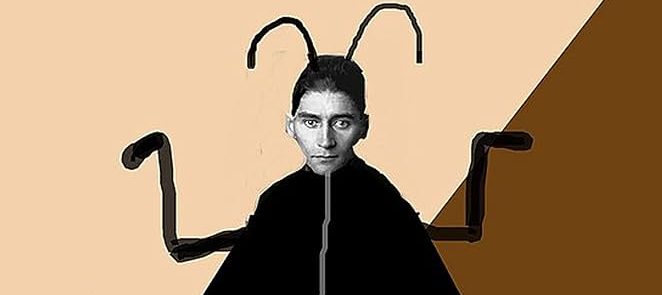
In Franz Kafka’s 1915 novella, Gregor Samsa opens his eyes and discovers he has been transformed into a gigantic insect. It is one of the most striking and visceral images in literature: a body rendered alien overnight, the self stranded helplessly inside.
The body is at once deeply personal and unnervingly unknowable. Body horror dials that up to eleven – destabilising everything we feel the body should be – safe, secure, rooted – and turning it into a site of hellish transformation.
From Kafka’s defining text to Mary Shelley’s Frankenstein, body horror has long been preoccupied with transformation. What our current moment adds to that theme is a reckoning with capitalism, shifting gender roles, technology and a culture of relentless comparison. In that context, body horror incisively tackles what happens when external pressures begin to remake us from the inside out, changing us in ways we never dreamed possible.
As Stephenie Carey, editor at Corvus, publisher of SL Gray’s body horror novel The Ward, says: “The extremity of body horror can be so arresting and visceral that it not only makes for a page-turning reading experience but it can really succinctly nail the wider point an author is making – it creates imagery that sticks with you because it works as a metaphor for the whole story.”
In June, Picador publishes New Skin, a debut novel by Sarah Wang about plastic surgery and the body as a symptom of the immigrant experience. It follows a daughter who discovers her mother has been disfigured after several botched back-street surgeries. When she learns her mother is set to appear in a reality television competition in which plastic surgery addicts compete for reconstructive surgery, she must confront the corrosive reality of the American dream that lies at the very heart of their relationship.
According to publisher Mary Mount, Wang’s novel “connects the aesthetics of beauty, and race, to our very real and horrifying political moment”. Wang told Publishers Weekly: “I’m really interested in extremes of the body – this horror of your own body, almost mutating yourself to where you become unrecognisable – has a lot to do with my concerns about immigrant women and marginalised people who are marked by gender, sexuality, race, even class. Sometimes the only agency we have is with our own bodies, so it can feel empowering to have that jurisdiction over your body as a site of aspiration, reinvention, class mobility, and identity.”
For Alicia Pountney, editor at Canelo, which publishes body horror titles including Natural Beauty by Ling Ling Huang and the forthcoming Nothing Tastes as Good by Luke Dumas, body horror inverts that sense of agency and empowerment, ultimately asking: “what happens when the body is no longer a place of safety?” “This is extremely relevant in a world that feels increasingly unsafe,” she adds.
The transformation economy
Flat, gleaming teeth. Poreless skin. Bouncy hair. Everywhere you swipe, the same uncanny face is reflected back at you. Horror story or Instagram story?
We see this thread of beauty distorted in Natural Beauty, which follows a gifted pianist as she enters the world of an elite wellness brand whose promise of perfection masks something far more parasitic. E.K. Sathue’s Youthjuice and Mona Awad’s Rouge similarly skewer the cult of perfection, with horrifying consequences. And in wider media, films like The Substance and shows like The Beauty also take aim at our corporeal fixations.
Meanwhile, Nothing Tastes as Good exposes the dangerous effects of diet culture. When Emmett Truesdale, an overweight gay man in Southern California, signs up for clinical trials for an untested drug called Obexity, he sheds pounds – and his sense of self – at superhuman speed. It’s a fascinating and timely indictment of diet culture’s more insidious extremes, where thinness is treated as both moral virtue and social currency, and is all the more unsettling with the emergence of unregulated weight-loss drugs. “Why do we value our appearance so much more than our health?” asks Pountney. “It’s an important question to ask and an interesting one to address within the body horror sphere.” Body horror makes this tension of prizing looks over health tangible – forcing it out of the abstract and into flesh.
Whose body is it anyway
It’s notable that many of the voices in this space are women. A clear reason is that women’s bodies have been contested and regulated since the dawn of time – shaped by lived realities such as menstruation, pregnancy and the ongoing policing of physical autonomy, including practices such as Female Genital Mutiliation and foot-binding, and the recent overturning of Roe v Wade in the US. As Pountney puts it, “Our bodies are a battlefield.”
Joyce Carol Oates echoes this thought. “To be female is to inhabit a body that is by nature vulnerable to forcible invasion, susceptible to impregnation and repeated pregnancies, condemned to suffer childbirth,” she says in the introduction to A Darker Shade: New Stories of Body Horror from Women Writers, a collection featuring work from Margaret Atwood, Raven Leilani, Lisa Tuttle, and more.
She writes that body horror in its “myriad manifestations” speaks “most powerfully to women and girls”. Taking as an example the demonic gorgon Medusa, the “quintessential emblem of female body horror”, Oates paints a sobering picture that speaks to the double bind at the heart of womanhood: “women should be beautiful and desirable even as they will be punished for being beautiful and desirable, at least outside the protective perimeters of marriage.” And so, she argues that the collection’s depictions of body horror “[beat] in defiant opposition to the confinement of the female by the patriarchy, as by images of self-laceration and defeat internalized by tradition”.
Similarly, in a Penguin article on women rewriting horror, Catherine Spooner, Professor of Literature and Culture at Lancaster University, points out that the collision of motherhood, womanhood and domesticity with horror “provides a ready-made vehicle for today’s writers to address things such as the MeToo movement or everyday sexism”.
Meanwhile, Carey highlights the rise of “female rage” in horror, arguing that these stories resonate as “very necessary and very timely” expressions of anger. We can see this clearly in works like Nightbitch by Rachel Yoder. Now a film starring Amy Adams, this darkly comic body horror satire sees a mother begin to physically mutate into a dog in response to domestic confinement and suppressed rage.
But to frame body horror as purely a feminist literary project risks flattening the diversity of perspectives at play. As Pountney notes: “There are lots of brilliant trans authors who write body horror – what can be more terrifying than a body you don’t recognise, that you feel is not your home?” She also flags the intersectionality of experiences portrayed in body horror. “It’s not just female voices but women who are also queer, disabled, or POC. To call this purely a feminist literary project would be reductive.”
These wider implications highlight that this genre is heavily concerned with bodily autonomy – and the more sinister forces that threaten that autonomy. As Natasha Qureshi, writing for The Novelry, says: “Body horror stories strike at the heart of one of our greatest fears: that our bodily autonomy will be taken from us. That we will be changed in a way we didn’t consent to, to the point where we no longer recognize ourselves.”
Untethered
To the East, the boundaries of the body itself are beginning to dissolve. In The New Seoul Park Jelly Massacre by Cho Yeeun, translated by Yewon Jung and published by independent press Honford Star, bodies merge with one another when visitors to Korea’s greatest theme park are tempted by a mysterious candy that promises an unbreakable bond, with catastrophic results. For editor Taylor Bradley, this is emblematic of a wider change in literature: “Man vs nature is out,” he says. “Man + nature is in.” Across his list, he points to freak fish creatures, tree-human hybrids and tentacles emerging from vaginas: images that collapse the distinction between human and non-human, as well as self and environment.
This same collapse can also take a quieter, more interior form – South Korean author Han Kang’s The Vegetarian explores what happens when the body begins to refuse the categories imposed upon it. Its central character, a mild-mannered office worker who stops eating meat and comes to believe she is turning into a plant, uses bodily withdrawal as a form of resistance, reading as both a transgressive commentary on Korean social etiquette and a critique of patriarchal norms.
Where next?
More broadly, the horror genre itself is expanding in tone and reach. Carey points to a rise in contemporary voice-led, darkly comic novels that rework familiar tropes – for example, Barbie Just Won’t Die!, a forthcoming title from Atlantic that satirises the male-dominated horror genre. Even in YA, novels like Only Ever Yours and Uglies have long explored the horrors of bodily perfection and social control, underscoring that these anxieties take root early on in our lives.
For her part, Pountney is in no doubt that the genre is here for the long term, arguing that “body horror is already embedded into the structure of fiction”. In fact, she’s actively seeking acquisitions that explore colonialism, queerness, neurodivergence and chronic illness through the body horror lens, and flags neurodivergence in particular as underexplored territory.
We all have bodies that are uniquely ours – and these varied, specific bodies, and all the things that could go wrong with them, are what give the genre its broadest reach, with body horror becoming a kind of universal language of shared vulnerability and fear. As Bradley puts it: “Gross stuff happening to bodies works in any language. It’s probably one of the easier translatable areas of literature.”
LITERARY AGENTS
- Julie Gourinchas at bell Lomax Moreton
- Louise Buckley at Hannah Sheppard Literary Agency
- Imogen Morrell at Greene & Heaton
THE RECIPE
- Take… a recognisable human anxiety
- Add… the body as the site of conflict
- Stir in… desire and temptation
- Sift out… pure shock for its own sake
- Cook… until horror and humanity are indistinguishable
THREE NOTABLE PUBLICATIONS
Natural Beauty, Ling Ling Huang
What would you sacrifice for the perfect body? Broke and adrift in New York, classical pianist Naomi falls into the orbit of Holistik, an elite beauty brand whose products promise perfection – and deliver something far stranger. A razor-sharp skewering of wellness culture and the industries that profit from our insecurities. Huang is also a lauded violinist! Woman of many talents.
The Vegetarian, Han Kang
A quietly devastating triptych of control, desire and bodily autonomy. When Yeong-hye stops eating meat after a vivid, violent dream, her refusal ripples outward, destabilising the men around her and exposing the violence beneath the surface of an ordinary life. Kang turns the human body into a battleground, and a means of escape.
Nightbitch, Rachel Yoder
A darkly comic howl of maternal rage. A nameless mother, sidelined from her career and consumed by the relentless grind of early parenthood, begins to suspect she is turning into a dog. Yoder’s debut mines its outlandish premise for both horror and dark comedy, and uses it to say something true and feral about what early motherhood costs a woman.


Leave a Reply